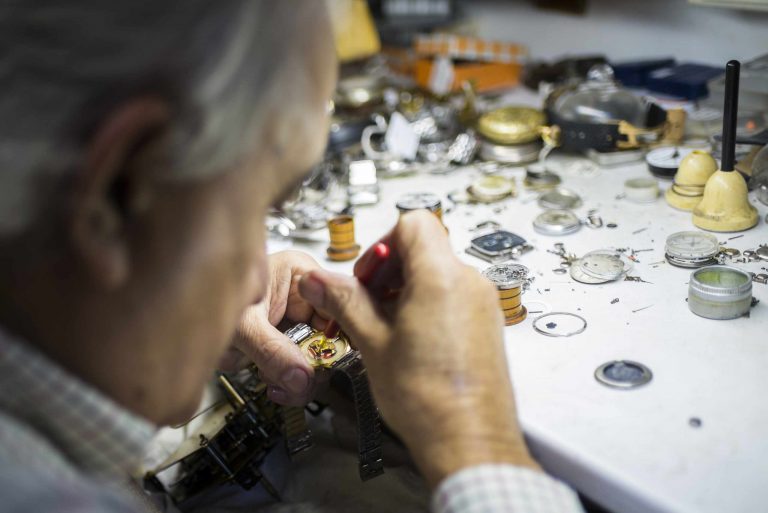
Your old watch might seem like a perfect first project, especially if it’s stopped working. However, don’t grab the case knife just yet. First check if the watch has any monetary, historical or sentimental value. A family heirloom, an unknown vintage piece or a watch with a signed movement can be very difficult to replace, even if the case is scratched. The first few attempts should be done on a watch where the consequences of errors can be overlooked. It is acceptable for screws to be mixed up, components to get scratched, and even if you can’t reassemble it. Any watch that fits these criteria should make an excellent practice watch.
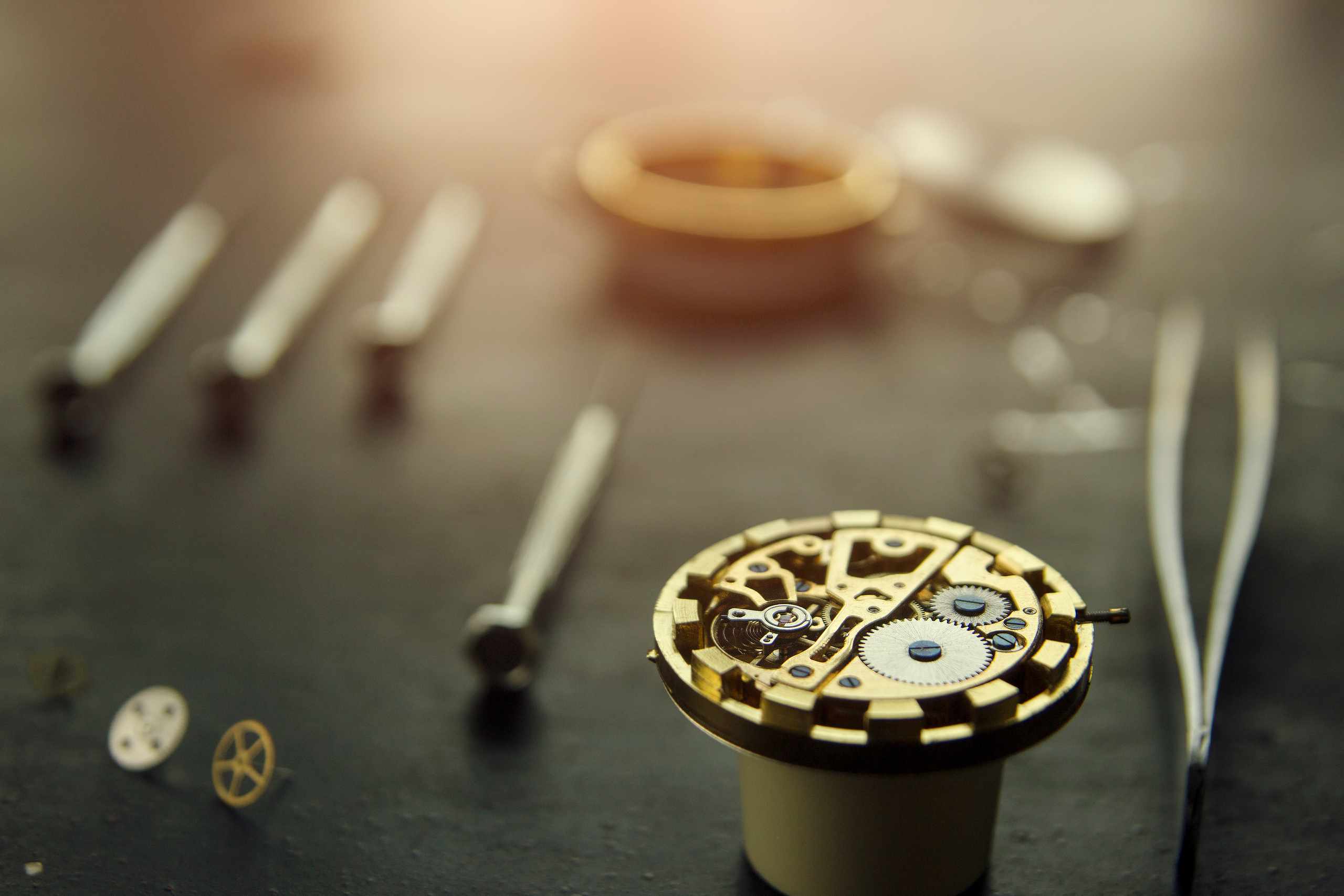
Ideally, it is affordable, a fairly simple mechanism and has all its components. Simple watches, like ones with hand-wound movements, are easier to take apart than automatic watches with a rotor, as there will be fewer parts. Watches that allow you to easily see all the parts (the barrel, train wheels, bridges, balance wheel assembly) are also helpful, as the identification of these components can be somewhat overwhelming. Avoid chronograph models, watches with complicated mechanisms, tiny movements and watches with signs of corrosion or major impact damage. Additional parts or previous damage can make it hard to tell if any issue is due to the watch itself or from your handling.
A functioning watch isn’t necessarily a bad idea, either. However, even a watch that doesn’t run could have missing screws, broken pivots, loose jewels, damaged gears, a bent hairspring, or other issues that prevent you from actually using it. Take the time to inspect the movement closely using a loupe, looking for empty screw holes, rust, scratched plates, or misaligned components. Also, turn the crown and feel if it winds. Even if it doesn’t fully run, a watch that can wind and unwind (or has a working balance wheel) will be more useful than an incomplete or unrepairable one.
The case style is also something to consider. Not all cases require the same type of tools, or are suited to the tools you may have on hand. Some cases only have snap backs and can be opened easily with a sharp tool; others have threaded backs that can be unscrewed with the appropriate tool, or even a small adjustable spanner. Others may have front-loading cases, water resistance, or even require a specialized tool to open. Using the wrong tool, or a makeshift tool, can cause the tool to slip and scratch the watch or even suddenly dive into the movement. Always check what kind of back your practice watch has before purchasing it. Avoid water resistant or unusual cases until you have had more experience.
Before you open anything, photograph the dial, hands, case back, movement and crown. Once the watch is in its stand and you’ve prepared a container for the parts, ensure all of the tools you will be using are clean and that their tips properly fit the screws. Don’t do anything too ambitious for your first session. Focus on taking photographs, opening the case safely, and identifying components. Don’t go overboard with removing parts, and don’t take apart the entire movement if you can help it. A good practice watch will present manageable challenges.
What bridge does the train wheels sit under? How does the stem connect to the keyless works? Are the screws easily identifiable? A bad practice watch can cause issues that won’t teach you anything about watch repair. If a watch has unknown value, rare parts, significant sentimental attachment or you aren’t familiar with the movement, then don’t waste your efforts. Learn restraint early on, and it will serve you well throughout your career.