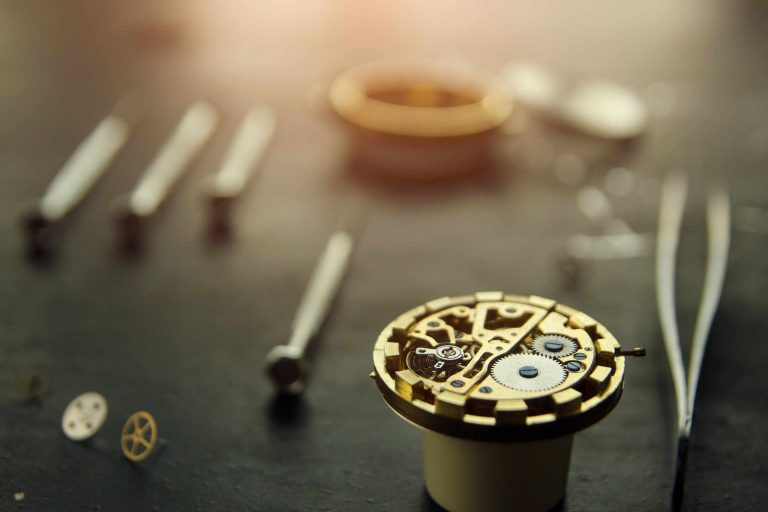
Watch screws don’t usually go missing because they’re invisible; they go missing because they’ve escaped the bench. It’s common for them to get caught on the tip of tweezers and roll off a smooth surface, stick to a finger cot or bounce out of a parts tray. Then the shiny head of the screw is lost in the dust and reflection of the floor. Keeping watch screws from escaping is easier than finding them again.
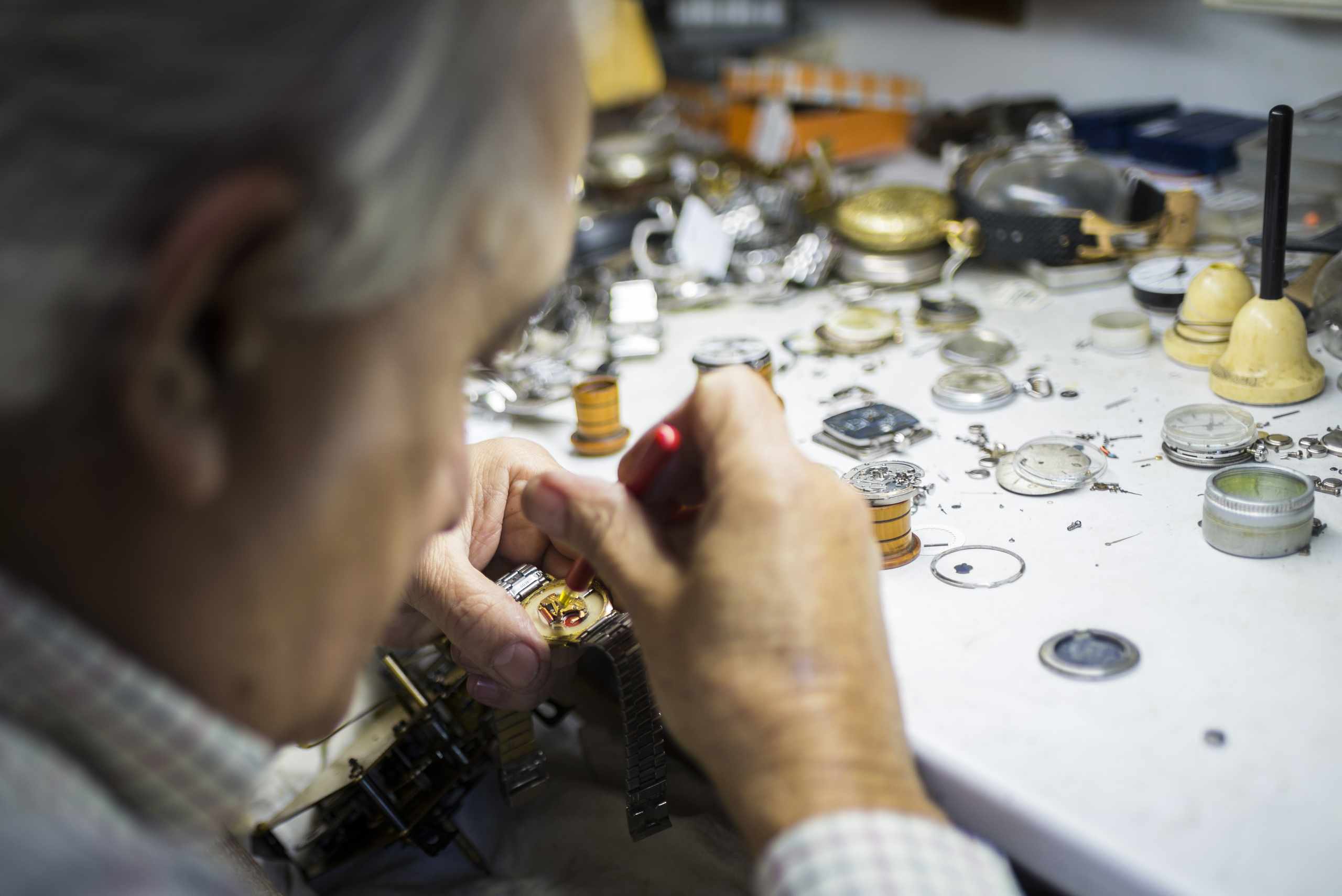
The bench should act as a brake for parts, not an accelerant. Working on a clean, light-coloured mat with high sides, clear the bench of other tools, cleaning materials, packaging and loose parts. The movement should be held securely in a movement holder. An overhead lamp illuminates parts that have fallen on the bench. The top of a covered compartment tray keeps parts from being blown away by air currents, from sticking to sleeves, and from being brushed accidentally.
Parts trays must do more than keep track of individual parts; they must keep track of their locations. Even seemingly identical watch screws can vary in length, pitch, shoulder profile and head thickness. Mixing up a screw for the balance cock bridge and one from the keyless works can cause poor seating or damage when trying to tighten the screw back into place. Position each screw next to the part it was removed from or use a compartment tray designed to follow the order of disassembly. If multiple similar screws are involved, take pictures before and after the removal process.
Try an experiment with watch screws before you take apart a complete watch. Place three screws of your choice in an empty tray and practice moving them individually into different compartments with your tweezers. Try to grasp the screw near the side of the head rather than grasping the threads. During the transfer, keep the tips of the tweezers low to the tray. If the screw does slip, it will drop a very short distance rather than fly across the entire bench.
One reason screws will “jump” out of tweezers is because the screw has been clamped too tightly in the tip. Tweezers that are out of alignment can also make the screw jump if the screw is being touched at two unequal points. You can check the condition of your tweezers with a loupe. Make sure the tips touch each other evenly along the entire edge. Clean oil and dirt off the tweezers properly before using them. If possible, unscrew the screw with a screwdriver and then use tweezers to pick it up only when it has been completely freed from the bridge or main plate.
The dropped watch screw might be hiding in some unlikely places. Check underneath the movement holder, in the folds of a cleaning cloth, on the edge of a bench mat or on the tip of a tool before looking elsewhere. Don’t brush off the surface of the bench with your hand, as this could cause the missing screw to fall to the floor. After you finish working, compare the screws in the tray to the empty screw holes and the photos. If the number of screws matches, the movement can be sealed and the bench cleaned.