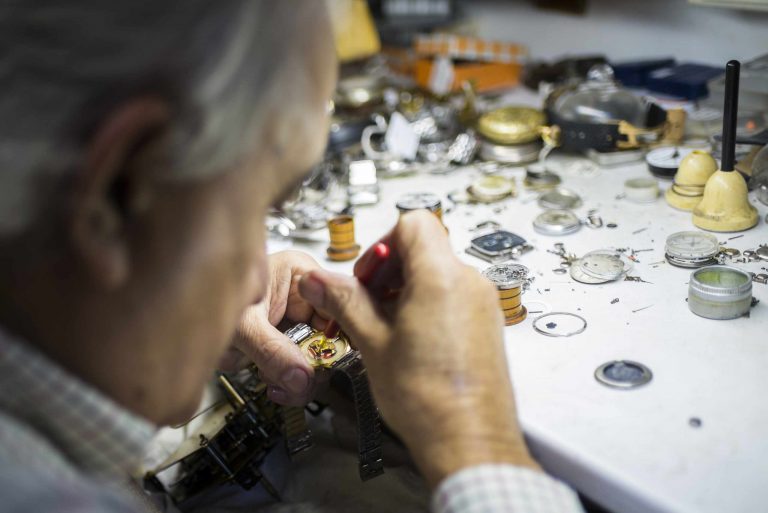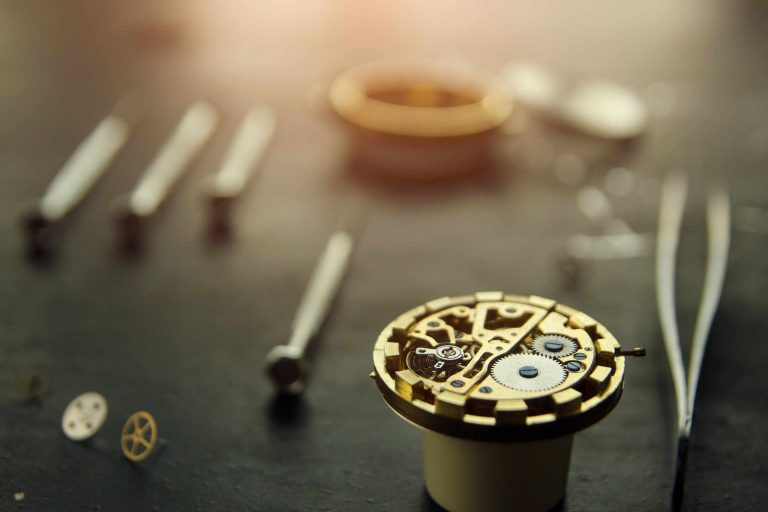

Put a few watchmaker screwdrivers next to an inexpensive training movement. Pick one visible screw and look at it through a loupe. Do not turn the screw. Gently bring each blade toward the slot and see which one fits best. The right blade will nearly fill the full width of the slot. It will drop into the slot deep enough to hold it in place. It will line up well with the head of the screw. That check takes only a second, and it keeps you from getting a lot of bad screw heads.
A blade that is too narrow concentrates the pressure around the middle of the slot. If you turn the screw, the blade may tilt and twist, or it may gouge the slot, or it may leave a deep scratch across the face of the screw head. A blade that is too wide will sit on top of the bridge and not go into the slot completely. It may slide across the surface of the bridge before the screw starts to turn.
The thickness of the blade is just as important as the width. Many watch screws have narrow, shallow slots, so a thicker blade will rest on the top edges of the slot. A very thin blade will go deeper into the slot, but it may bend or even snap if you push too hard. If you can, look down the length of the blade from the side. You want to see the blade resting on the entire bottom surface of the slot, not just sitting on one side or another.
The screwdriver should also line up straight with the screw. If you tilt the handle, the corner of the blade can pull itself out of the slot. Keep the movement fixed in the movement holder. Rest your working arm on the table. Place one finger gently on the knurled part of the screwdriver. Use your other fingers to rotate the handle while keeping light downward pressure on the screw.
If a screw resists your efforts, do not immediately apply more force. There are many reasons why the screw will not budge. The screw could simply be tight. It could be corroded. You could be using the wrong type of screwdriver. You could be holding it at a bad angle. Take another look through the loupe to be sure you have the correct blade. Make sure that your movement holder is not allowing the movement plate or bridge to slip while you work.
Watchmaker screwdriver blades can also become damaged over time. The edge of the blade can wear away and become rounded or irregular. The corners can become highly polished. Those changes make it harder for the blade to grip the sides of the slot. If the blade is slightly worn, you might be able to restore it to its original shape by filing it carefully on the appropriate sharpening stone. But the tip must remain flat and square and designed for use on a watch screw. A worn blade may appear to fit the slot perfectly while actually pushing against only one side.
Good tool selection is characterized by stability, not by brute force. The blade drops cleanly into the slot and stays in the slot while you turn the handle. The screw head shows no signs of being scratched or marked. Before you remove a screw from a mechanical watch, pause, look at it under a loupe, and assess the width, thickness, depth, and angle of the blade. That quick inspection will save you from ruining the screw or the surrounding parts of the movement.